Denial Code Library
The Complete Insurance Denial Code Library — What Every Code Means
The ClaimCompass Denial Code Library translates every major insurance denial code and tells you exactly what to do.

Alex Rivera
July 11, 2026
A significant percentage of medical bills contain errors. Here is how to dispute charges step by step.
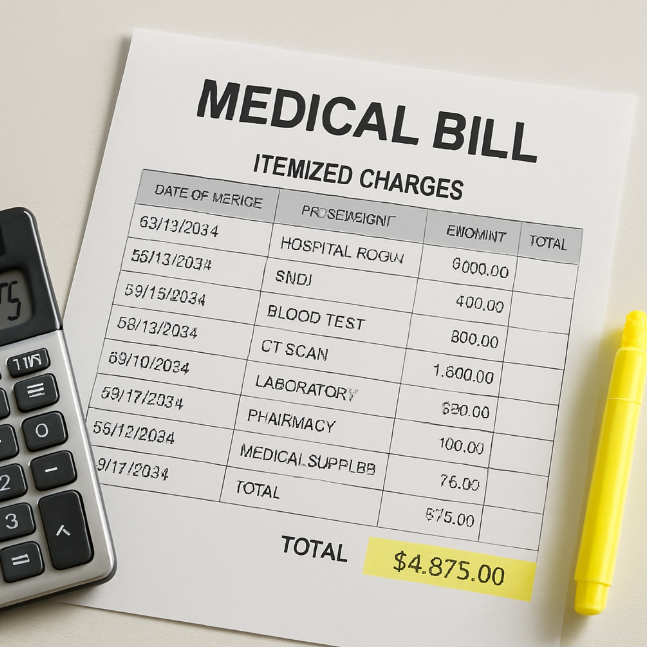
Studies consistently show that a significant percentage of medical bills contain errors. Duplicate charges, incorrect procedure codes, services billed but not rendered, and mathematical errors are common. Before paying any medical bill, review it carefully.
You have the right to request a complete itemized bill from any healthcare provider. The itemized bill lists every charge individually —every procedure, every supply, every medication — with the corresponding code and cost.
Compare the itemized bill against your Explanation of Benefits from your insurer. Every line item on the bill should correspond to a charge your insurer received, and what you owe should match your EOB.
Your EOB is not a bill — it is a statement from your insurer explaining what was billed, what was covered, what was adjusted, and what you owe. Compare it carefully to the provider's bill.
Look for:
- Services listed on the bill that do not appear on your EOB
- Amounts on the bill that do not match your EOB patient responsibility
- Charges for dates you were not seen
- Duplicate charges for the same service
- Charges for services described differently than what you received
If you received emergency care or received care at an in-network facility from an out-of-network provider you did not choose, the No Surprises Act may limit what you can be billed. You cannot be charged more than your in-network cost-sharing amount for qualifying surprise bills.
If you receive a bill that appears to violate the NoSurprises Act, contact your insurer and file a complaint at 1-800-985-3059.
Submit a written dispute to the provider's billing department. Include:
- Your account number and date of service
- A specific description of the error or disputed charge
- Documentation supporting your dispute — your EOB, itemized bill, and any relevant records
- A request for correction and a response within a specific timeframe
Send by certified mail and keep a copy of everything.
If the bill is accurate but you cannot pay it, most healthcare providers have financial assistance programs, charity care, and payment plans. Ask specifically about:
- Financial assistance or charity care programs
- Income-based sliding scale reductions
- Prompt pay discounts for immediate payment
- Extended payment plans with no interest
- Medical debt settlement for uninsured or underinsured patients
If the provider refuses to correct an error or violates your billing rights, file complaints with:
- Your state insurance commissioner for insurance-related billing disputes
- The No Surprises Help Desk for surprise billing violations
- Your state attorney general for consumer protection violations
- The Hospital Patient Advocate if the provider is ahospital — most have them
ClaimCompass analyzes your medical bill or denial and generates a formal written dispute letter asserting your rights.
Upload your bill or denial at myclaimcompass.ai for a free analysis.
Yes — if an incorrect bill goes to collections, it can appear on your credit report. Dispute errors in writing immediately and request that collections activity be halted while the dispute is under review.
There is no universal time limit, but act promptly. Some providers have internal dispute windows, and the statute of limitations for debt collection varies by state.
Request a refund. You have the right to a refund for any overpayment or incorrect charge. Submit a written refund request to the billing department.